

Electronics refers to the branch of physics and engineering that deals with the study and application of electrical circuits and devices. It involves the control of electrical energy to process information or perform tasks. Here are some key concepts and components related to electronics:
Components:
Resistors: Resistors limit the flow of electric current.
Capacitors: Capacitors store and release electrical energy.
Inductors: Inductors store energy in a magnetic field.
Diodes: Diodes allow current to flow in one direction.
Transistors: Transistors are semiconductor devices that amplify or switch electronic signals.
Circuits:
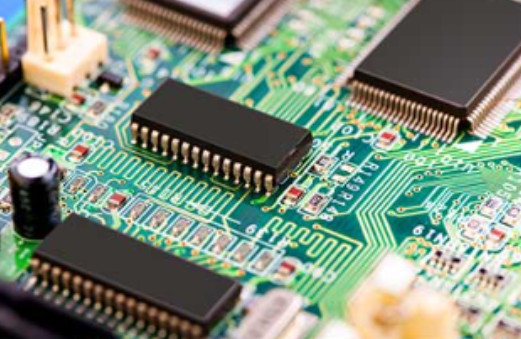
Printed Circuit Boards (PCBs): These provide a platform for connecting electronic components in a compact and organized manner.
Integrated Circuits (ICs): ICs are miniaturized electronic circuits that can contain thousands to millions of transistors on a single chip.
Power Supply:
Voltage Regulators: These maintain a constant output voltage despite changes in input voltage or load conditions.
Batteries: Common power sources for portable electronic devices.
Digital Electronics:
Logic Gates: Basic building blocks for digital circuits (AND, OR, NOT, etc.).
Microcontrollers and Microprocessors: These are the brains of many electronic systems.
Analog Electronics:
Amplifiers: Amplify signals, increasing their strength.
Operational Amplifiers (Op-Amps): Versatile analog components used in various applications.
Communication Systems:
Modulation and Demodulation: Techniques to encode information onto carrier signals and retrieve it.
Antennas: Transmit and receive electromagnetic waves for wireless communication.
Sensors and Actuators:
Sensors: Convert physical or environmental parameters into electrical signals.
Actuators: Convert electrical signals into physical action.
Digital Signal Processing (DSP):
Signal Processing: Manipulating signals for various purposes, like filtering or compression.
Electronic Devices:
Computers: Devices that process and store information.
Smartphones, Tablets, and Wearables: Portable electronic devices with diverse functionalities.
Robotics:
Control Systems: Electronics play a crucial role in controlling and guiding robotic systems.
The field of electronics is broad and constantly evolving, with applications ranging from consumer electronics to medical devices, telecommunications, and beyond. Advancements in technology continue to shape the electronics industry, leading to smaller, more powerful, and more efficient electronic devices.
https://www.ovaga.com/blog/fas....t-charging-technolog
#electronics